Doctoral Program in Communication Sciences
Program Description
The PhD in Communication Sciences provides a solid theoretical and methodological foundation aimed at understanding, analyzing, and explaining the main challenges in the field of communication. The program equips students with the tools necessary to independently conduct original and rigorous research on a range of communication-related issues.
The program is full-time, with a workload of 40 academic hours per week, and has a duration of eight semesters. During the first two semesters, students take five required seminars and three elective courses, selected according to their academic interests and in consultation with their supervisor and the program director. Elective courses may be taken from any doctoral program at UC.
Years of Accreditation
Program accredited by CNA-Chile for 5 years, from January 11, 2024, to January 11, 2029.
Program Objectives
To train researchers who, based on theoretical and methodological rigor, are capable of generating new knowledge on relevant issues in the field of communication and are prepared to work across diverse theoretical and practical areas and levels of the discipline.
Graduate Profile
Graduates of the program are highly qualified researchers, capable of independently contributing new and meaningful knowledge to the discipline. They are prepared to address communication-related issues from an interdisciplinary perspective, with an ethical, critical, and creative approach, and with consideration for the common good.
Graduates of the UC PhD in Communication Sciences may conduct research, contribute to public policy development, or enhance professional practice in the field of communication, depending on their thesis area.
Research Areas
- Journalism and Political Communication
- Communication and Technology
- Organizations, Communication Strategies, and Advertising
- Culture and Cultural Industries
Application Requirements
All applications must include the following documents, which must be submitted by email to the Graduate Studies Office of the Faculty of Communications at postgradofcom@uc.cl:
- Application form download here
- Degree and/or professional qualification certificate. The document must include a validation code. For degrees obtained abroad, the certificate must be apostilled.
- Undergraduate and graduate academic transcripts (if applicable). For applicants from abroad, the grading scale used must be clearly specified, including the minimum grade, passing grade, and maximum grade.
- Graduation ranking certificate. If the applicant’s institution does not issue this certificate, a document formally certifying this circumstance must be provided.
- Statement of Academic Interests and Intentions. The statement must not exceed three pages (Word document, single-spaced, Times New Roman, 12-point font). It must concisely address the following:
- Reasons for pursuing the PhD program and a description of the applicant’s academic or intellectual interests.
- Discussion of the expected impact of the PhD on the applicant’s academic or professional development, and justification for choosing this program over other alternatives.
- Commitment to the required level of dedication to the program.
- Doctoral Research Proposal. Maximum 3,000 words, presented in academic paper format, original, and including bibliographical references. It must include:
- The problem or phenomenon to be investigated.
- An overview of the conceptual framework and relevant literature.
- The proposed methodology for conducting the research.
- Copy of the national identity card, both sides, or passport.
- UC admission application (access here).
- Two confidential letters of recommendation, written by professors with whom the applicant has studied or collaborated on research projects, and/or by individuals who have supervised the applicant in a professional work setting. It is desirable that the letters be written by individuals holding a PhD or equivalent doctoral degree. The available template here must be used. Letters must be sent directly by the recommenders to postgradofcom@uc.cl.
- Recommended: Certificate demonstrating the applicant’s level of English proficiency. If the applicant is admitted, they must take an English proficiency test and demonstrate at least a B2+ level according to the Common European Framework of Reference for Languages (CEFR). If this level is not demonstrated, the student must take courses leading to B2+ proficiency, coordinated and funded by the UC Graduate School.
All documents must be submitted together, except for the letters of recommendation, which must be sent directly by the recommenders to the Graduate Studies Office. Partial submissions will not be accepted.
Graduation Requirements
- Successfully complete the current curriculum.
- Complete three Transversal Skills workshops, one of which must focus on Ethics.
- Be the author of a scientific article accepted for publication in an indexed journal.
- Complete an international research internship.
- Meet the English language proficiency requirement.
Research Areas
Ver más keyboard_arrow_down
Journalism StudiesJournalistic quality; production and effects of the journalistic message; news representation; journalistic narrative; information-disinformation and political processes. |
Communication and Digital TechnologyUses, appropriations and effects of digital communication and transmedia technologies; digital convergence; storytelling and digital languages; personalization of content and uses; audiovisual as a training tool. |
Strategic CommunicationCorporate communication; corporate trust and reputation; strategic health communication; communication and education; crisis communication and disaster situations. |
Media industryEconomic policy and management of content media and digital platform media; public policy and concentration of media ownership; comparative politics of media systems; publics and audiences. |
Advertising, Consumption, and CultureRepresentations in advertising; advertising and social imaginaries; visuality and consumption. |
Application Requirements
Ver más keyboard_arrow_down|
Applicants must send via e-mail to the Postgraduate Coordination, Matilde Plaza (matilde.plaza@uc.cl) the following documents:
*Printed documentation (only for admitted applicants):
The program does not require an application fee. Documents must be submitted in their entirety. Partial deliveries will not be accepted. |
Graduation Requirements
Ver más keyboard_arrow_down
|
Head of the program
Ver más keyboard_arrow_down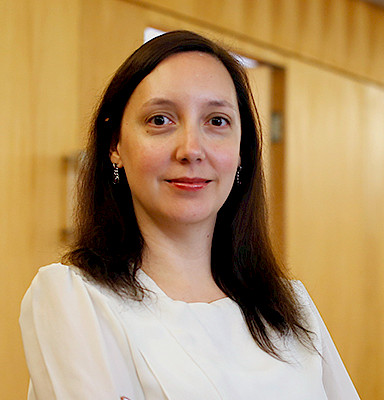
Ingrid Bachmann
She holds a PhD in Journalism from the University of Texas at Austin, a Master’s degree in Linguistics from Pontificia Universidad Católica de Chile, and a Bachelor’s degree in Social Information and Journalism from the same institution. Her research focuses on the intersection of journalistic storytelling, digital media, political communication, and gender.
Contact Form
Unidades académicas
Faculty of Communication